Most homeowners think of a roof as shingles on top of wood. In reality there's a layer between them that does most of the water-stopping work, especially during the moments when the shingles are under stress. That layer is the underlayment.
What Underlayment Actually Does
Shingles are the primary water-shedding layer, but they are not a true waterproof membrane. Wind-driven rain, ice dams, and the minutes during a tear-off when shingles are being replaced all rely on the underlayment to keep water out. A good underlayment is the second line of defense that turns a near-failure into a non-event.
Traditional Felt Paper
15# and 30# felt paper has been the standard for decades. It's tar-impregnated paper, available in rolls. Felt is inexpensive but has real weaknesses: it tears easily, wrinkles when wet, and only provides short-term weather protection if exposed. Most codes still allow it, which is why budget estimates often specify it.
Synthetic Underlayment
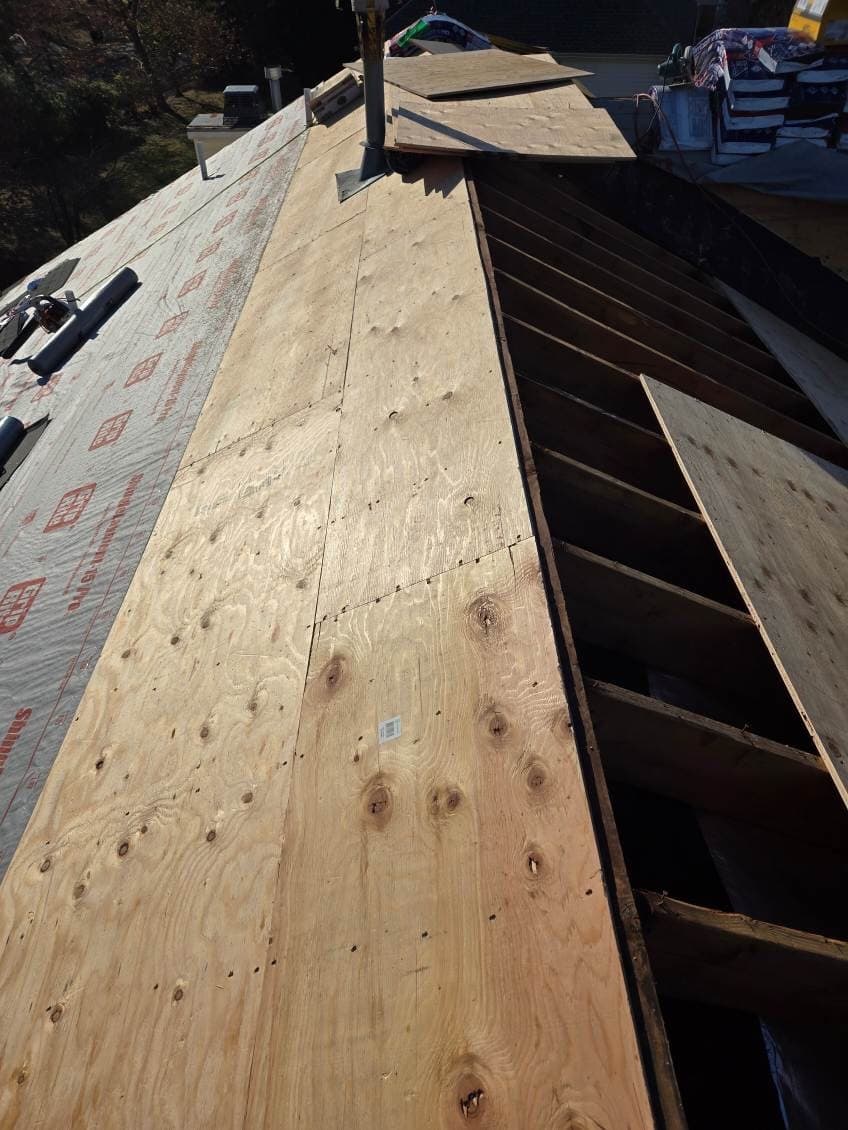
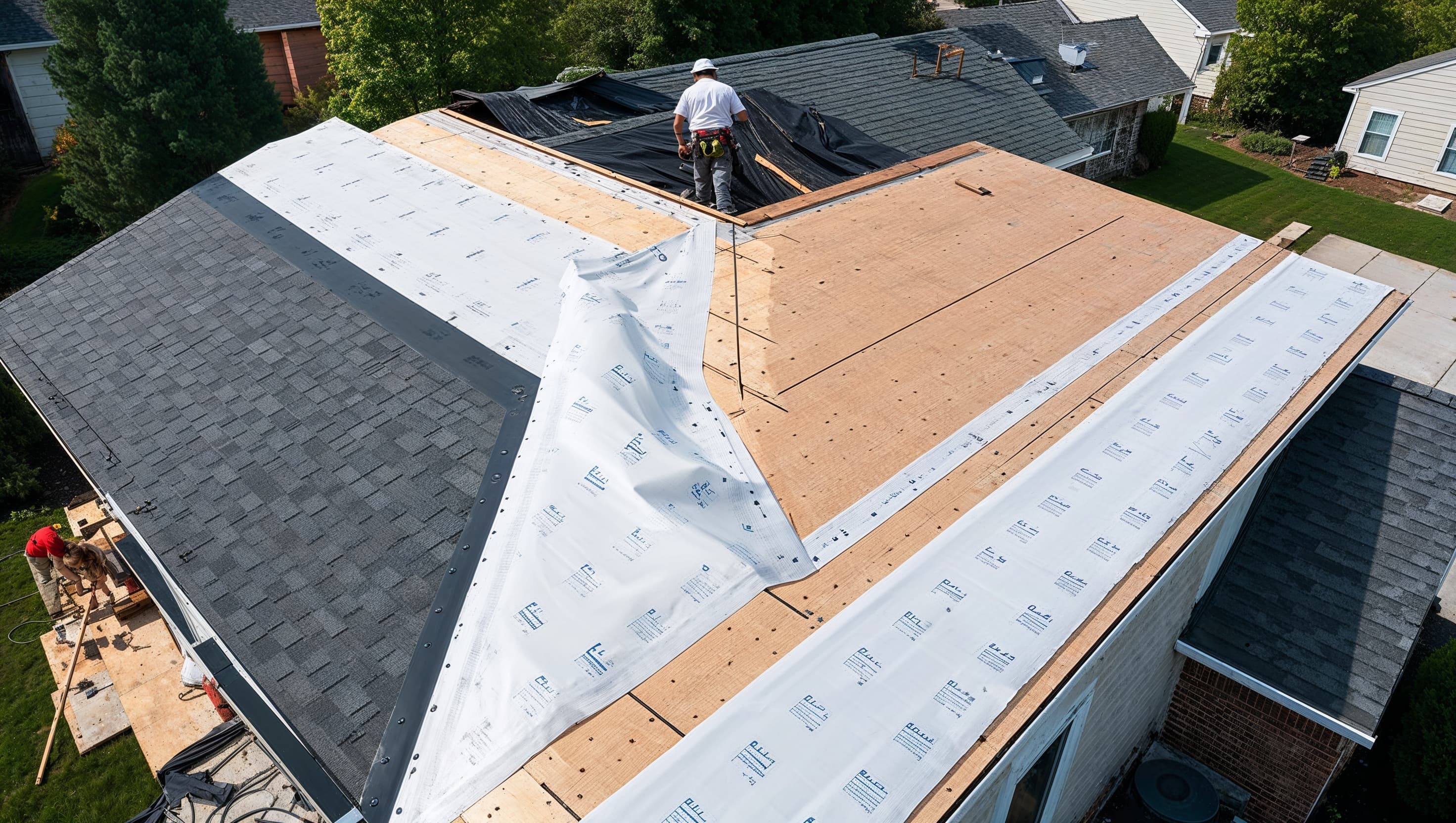
Synthetic underlayments are polypropylene or polyester based. They are lighter, stronger, more resistant to UV if briefly exposed, lay flatter, and don't tear at nail heads the way felt can. They also grip better underfoot so installers can work more safely. GAF FeltBuster, Owens Corning ProArmor, and Titanium UDL are common examples.
Ice and Water Shield
Ice and water shield is a specialized, peel-and-stick rubberized underlayment used in high-risk areas. It self-seals around nail penetrations, which is why it's applied at eaves, in valleys, and around chimneys and skylights. Code typically requires it along the eave extending past the warm wall line.
Why the Choice Matters
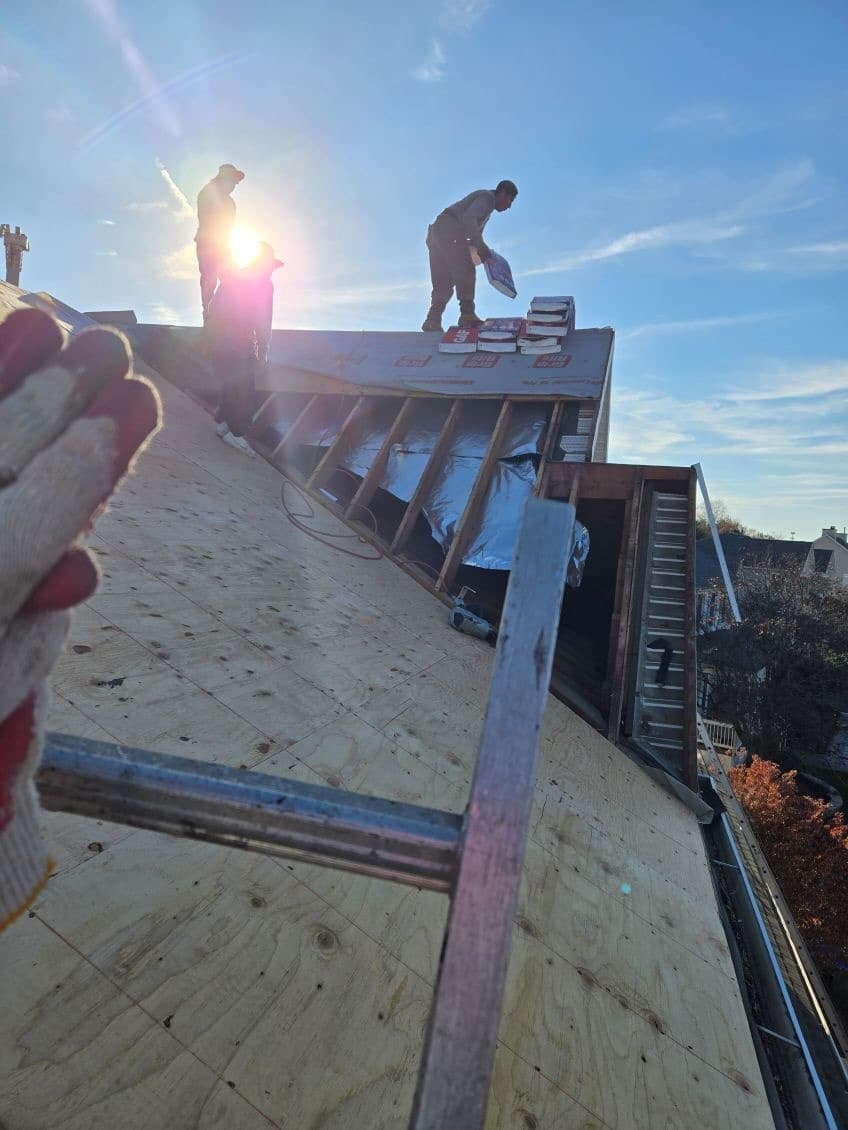
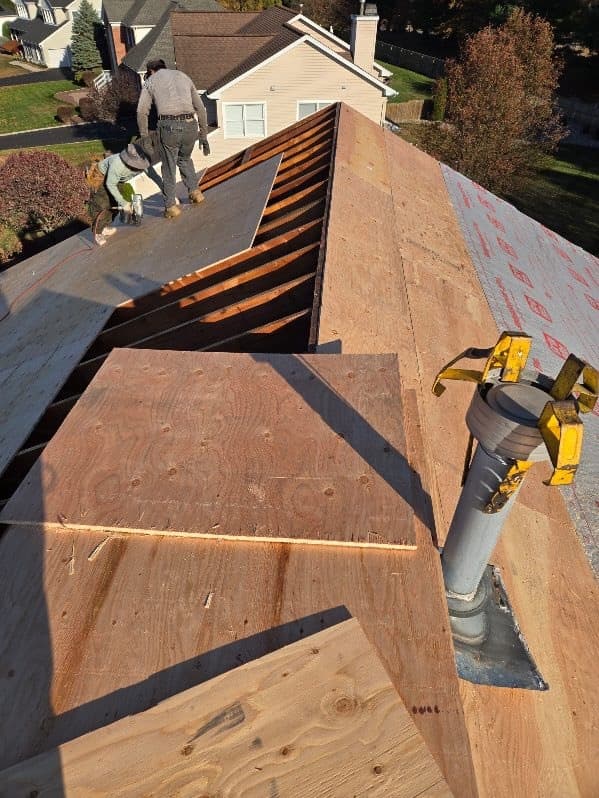
The underlayment choice won't show up on a drive-by, but it shows up in a dozen ways over the next 20 years. Synthetic underlayment plus ice and water shield in the right places can turn a strong storm into a non-event while the same roof with only felt starts leaking. In a tear-off, you also have a few hours where the underlayment is exposed, and synthetic handles that window much better than felt.
What to Ask Your Contractor
Get the brand and product name in writing on the estimate. Ask specifically where ice and water shield will be applied. A contractor who specifies both clearly is one who knows their work holds up.