Why decking matters
Decking is the structural layer your shingles nail into. Almost every home built in the last fifty years uses either plywood (CDX) or oriented strand board (OSB) sheathing. Both hold up well when they stay dry and fail fast when they do not.
Once water sits on decking for any length of time, the glue layers in OSB swell and the surface fibers fluff up. With plywood, the layers delaminate and the sheet loses stiffness. Either way, the nail-holding strength drops, the surface becomes soft, and your roof system is compromised.
How rot starts
The most common causes we see in the field: a missed nail in a valley, a cracked pipe boot, failed chimney flashing, ice dams in winter, or a gutter that back-pitches water onto the fascia. Each one drops small, repeated amounts of water onto the deck.
The decking does not fail all at once. It fails in patches, usually unnoticed until a roofer steps on a soft spot during a later repair.
Signs visible from the ground or attic
From outside, sagging between rafters, wavy shingle lines, or dark damp-looking areas after rain can be early signs. From the attic, look for dark staining on the underside of the deck, a crumbly texture, or light coming through where there should be solid wood.
What the repair looks like
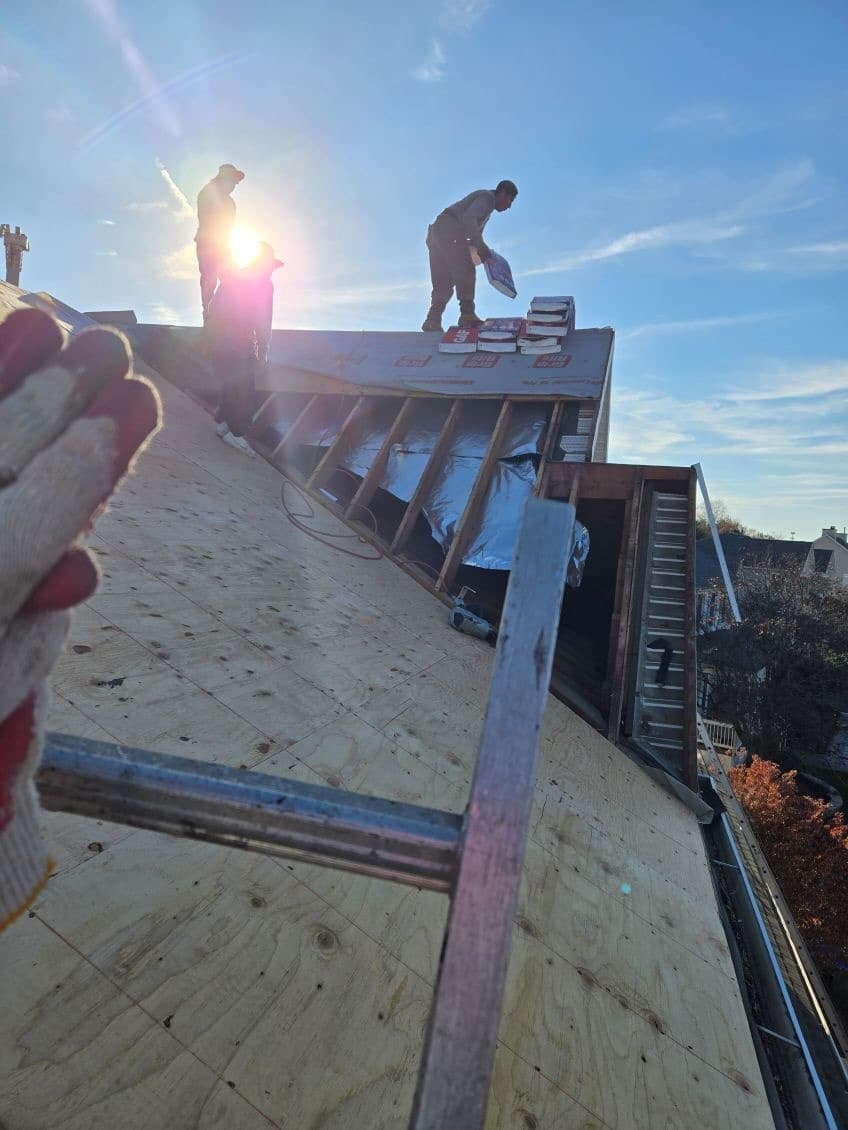
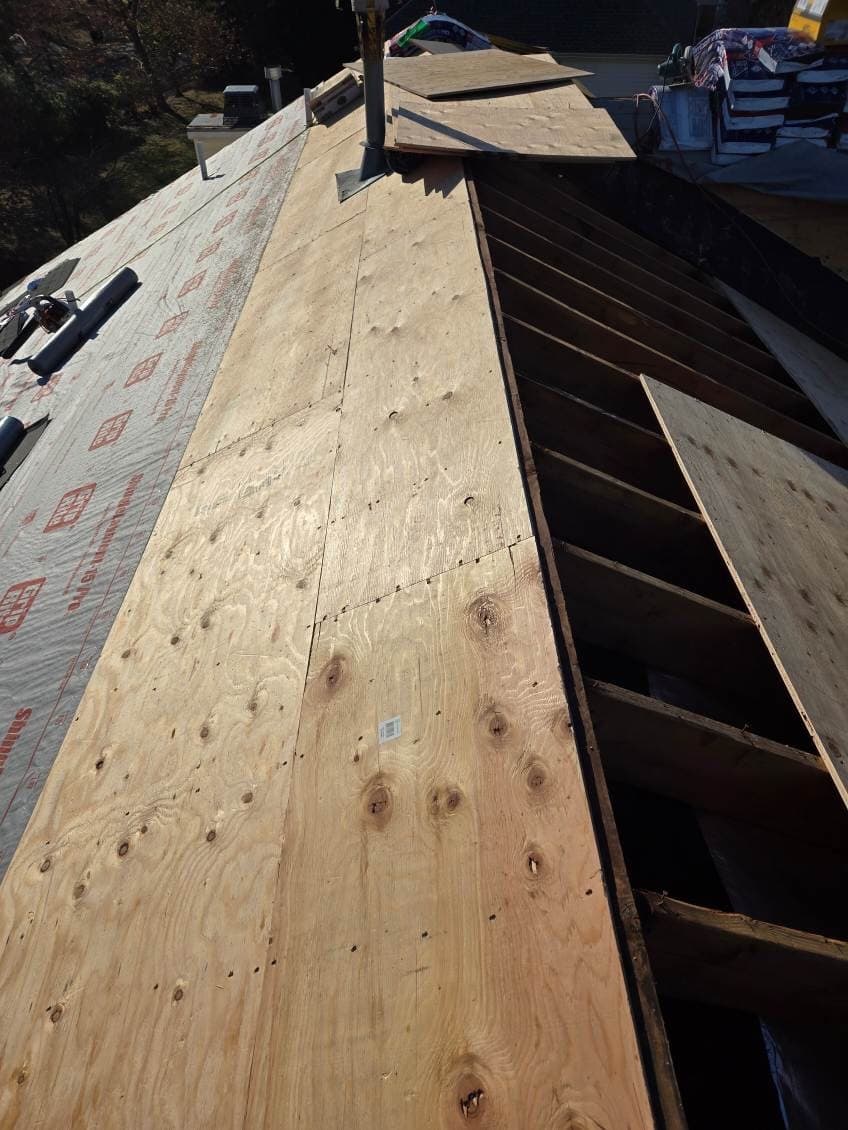
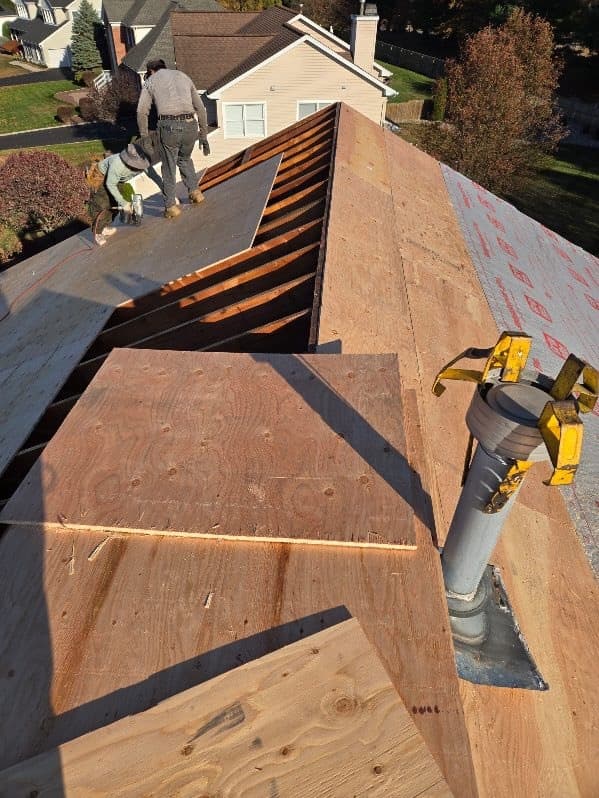
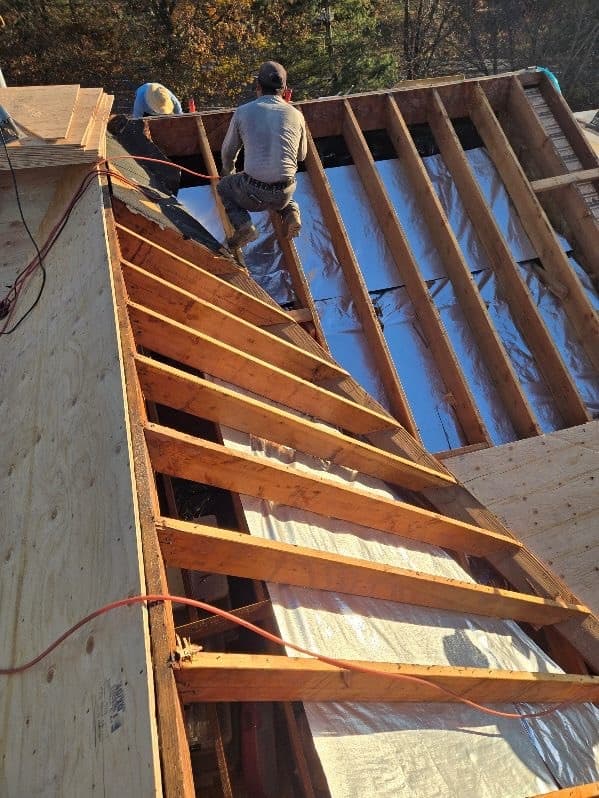
Rotted sheets are cut out at rafter centers and replaced with new CDX plywood. Adjacent rafters are checked and treated if needed. The new sheathing is dried in, and the shingles either re-woven back in or replaced as part of a larger project.
Catching decking rot early is the difference between a small patch and a full tear-off.