New Jersey roofs get tested four different ways every year. Understanding what each season does and where it leaves its mark makes it easier to catch damage early before the next season compounds it.
Winter: Freeze-Thaw and Ice Dams
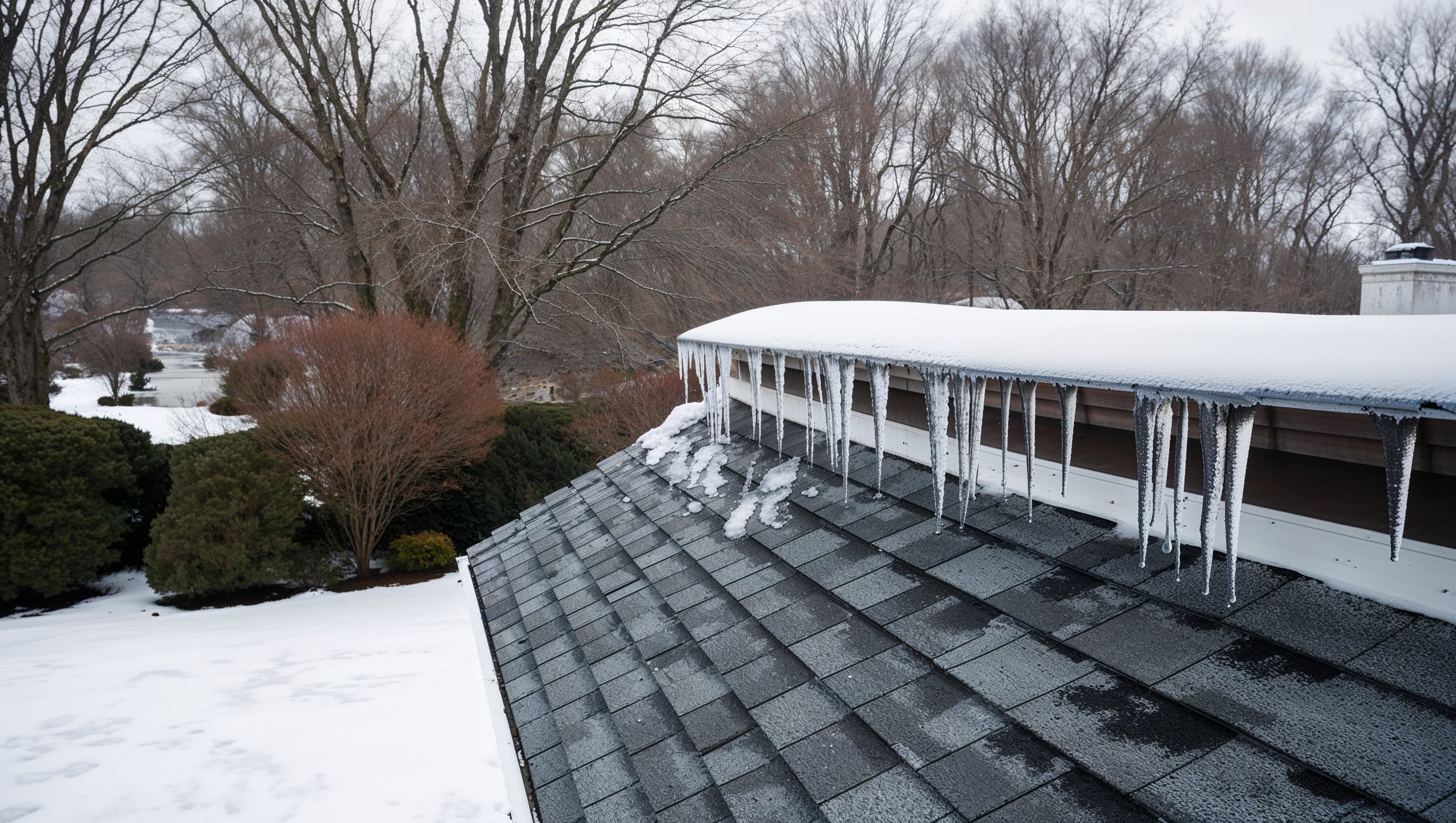
Winter's damage pattern comes from water changing phase. Water seeps into small cracks, freezes, and expands, widening the crack. Thaw, repeat, and by spring those hairlines are wide enough to leak. Ice dams form along eaves when attic heat melts snow that refreezes at the cold eave, forcing water backward under shingles.
Where to look in spring: eaves, valleys, the first few feet up from the gutter, and around any skylights or chimneys.
Spring: Heavy Rain and Wind
Spring in NJ brings long soaking rains and thunderstorm gusts. Rain exposes any winter damage immediately, often as the first leak of the year. Wind lifts any shingles whose adhesive seal was compromised by cold and flexing.
Where to look after spring: anywhere with a ceiling stain, and all along the ridge and hips for lifted shingles.
Summer: Thermal Stress and UV
Summer is the quiet killer. Dark roofs in direct sun can hit 160F surface temperature. That kind of heat, repeated daily, breaks down the asphalt binder in shingles and accelerates granule loss. Poorly ventilated attics double the effect by cooking the shingles from both sides.
Where to look after summer: south-facing slopes, around skylights, and in the gutters for granule accumulation.
Fall: Debris and Pre-Winter Stress
Fall doesn't damage a roof directly the way winter does, but it sets the stage. Leaves clog gutters, trap moisture against the fascia, and get into valleys. Wet leaves hold moisture against shingles for weeks. The first freeze turns all of that trapped moisture into damage.
Where to look going into winter: valleys, gutters, around chimneys, and anywhere trees overhang.
A Two-Inspection-a-Year Rhythm
The homeowners who get the longest life out of their roofs almost all inspect or have inspected twice a year: once after winter to catch freeze-thaw damage, and once in late fall to prep for winter. Catching a problem in March is always cheaper than finding it in January.